
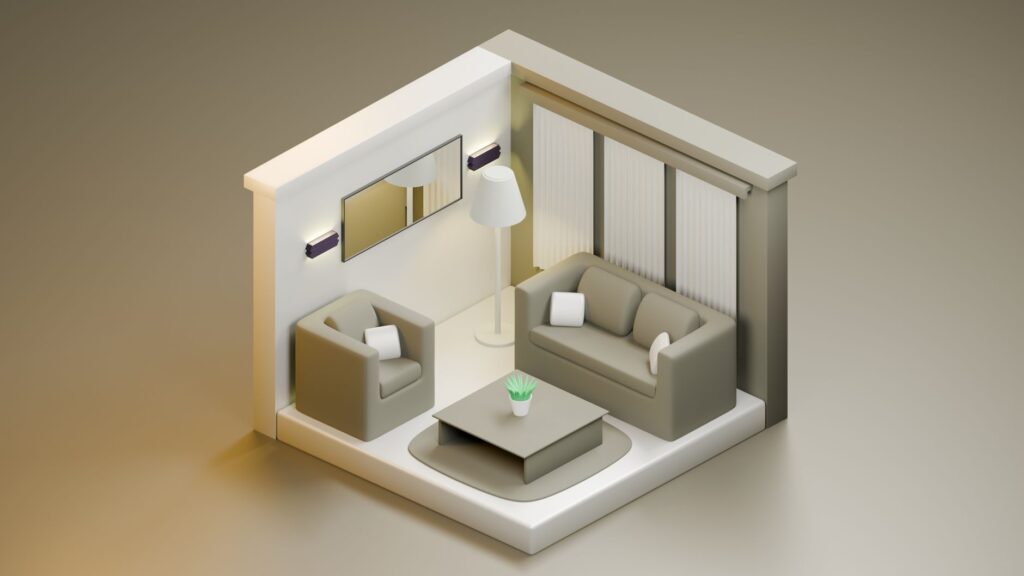
The Shift Toward Digital Furniture Visualization
In the modern manufacturing landscape, the reliance on traditional product photography is rapidly becoming a bottleneck for furniture companies. As digitalization accelerates, the demand for high-fidelity visuals that help customers truly ‘see’ and ‘feel’ a product in their own space has never been higher. Transitioning to 3D furniture modeling is no longer just a technical advantage—it is a competitive necessity. By leveraging Computer-Aided Design (CAD) and advanced 3D rendering, manufacturers can move beyond the physical constraints of studio setups to create infinitely scalable marketing assets.
Strategic Advantages of 3D Furniture Rendering
For those new to the field, 3D modeling involves creating a digital representation of a physical object using specialized software. When combined with rendering—the process of calculating light, shadows, and textures to create a photorealistic image—it allows for unprecedented control over your visual assets. Here is how this approach elevates your product strategy:
- Limitless Environment Control: Unlike a physical studio, a digital space allows you to swap backgrounds, architectural styles, and lighting conditions instantly. This ensures your products are always showcased in the perfect, mood-appropriate environment.
- Precision Lighting and Optics: Through 3D software, you have total control over light intensity, color temperature, and shadow behavior. This eliminates the ‘trial and error’ phase of traditional photoshoots, ensuring every image is studio-quality.
- Instant Material Versatility: With digital models, swapping fabric textures or wood grains takes seconds. This efficiency allows brands to offer vast product variations online without the logistical nightmare of physical inventory and staging.
- Immersive AR/VR Integration: Your 3D base file serves as the foundation for Augmented Reality (AR) experiences. Customers can place your furniture directly into their homes via mobile apps, which is a powerful driver for conversion and confidence.
- Simplified Global Collaboration: By outsourcing 3D assets to specialized firms, you can tap into a global talent pool. This removes geographical barriers to professional design, allowing you to iterate on projects remotely while maintaining strict quality control.
Technical Significance: Beyond Aesthetics
The transition to 3D isn’t just about making things look good; it is about engineering-grade accuracy. When we discuss CAD (Computer-Aided Design) in this context, we are referring to the precise geometry that defines every curve and joinery detail of your furniture. This accuracy ensures that when customers view a ‘360-degree spin’ or an ‘exploded view’—a technical animation showing how internal components are assembled—they gain a deeper appreciation for the product’s durability and build quality.
Furthermore, 3D modeling supports rapid iteration. If your design team needs to tweak the dimensions of a chair or the slope of a backrest, these changes are implemented digitally in the design file, eliminating the need to build and photograph multiple physical prototypes. This significantly reduces waste, aligning your brand with sustainable, green manufacturing practices.
Future-Proofing Your Marketing Strategy
The ability to create high-resolution, print-ready assets ensures that your marketing collateral—from billboards to social media posts—remains sharp and professional regardless of the medium. Even the most complex technical challenges, such as managing reflections on glass or metallic surfaces, become non-issues in a virtual environment where you control every ray of light. When you move to a digital-first approach, you are effectively creating a ‘virtual studio’ that can output high-speed, consistent content throughout the entire product lifecycle.
Ultimately, the marriage of 3D technology and artistic rendering provides a richer experience for the buyer. It bridges the gap between the digital catalog and the living room, reducing hesitation and increasing customer satisfaction. Whether you are a startup looking to validate a new design via pre-sales or an established furniture manufacturer updating your seasonal catalogs, digital models offer the agility required to stay ahead of the curve.
How to Start Your 3D Journey
If you are ready to modernize your product photography strategy, working with experienced professionals is the best next step. Specialized platforms provide access to vetted designers who understand the intersection of aesthetics and engineering. By leveraging their expertise, you can transform simple design concepts into highly marketable, photorealistic assets that resonate with your target audience and drive sales.